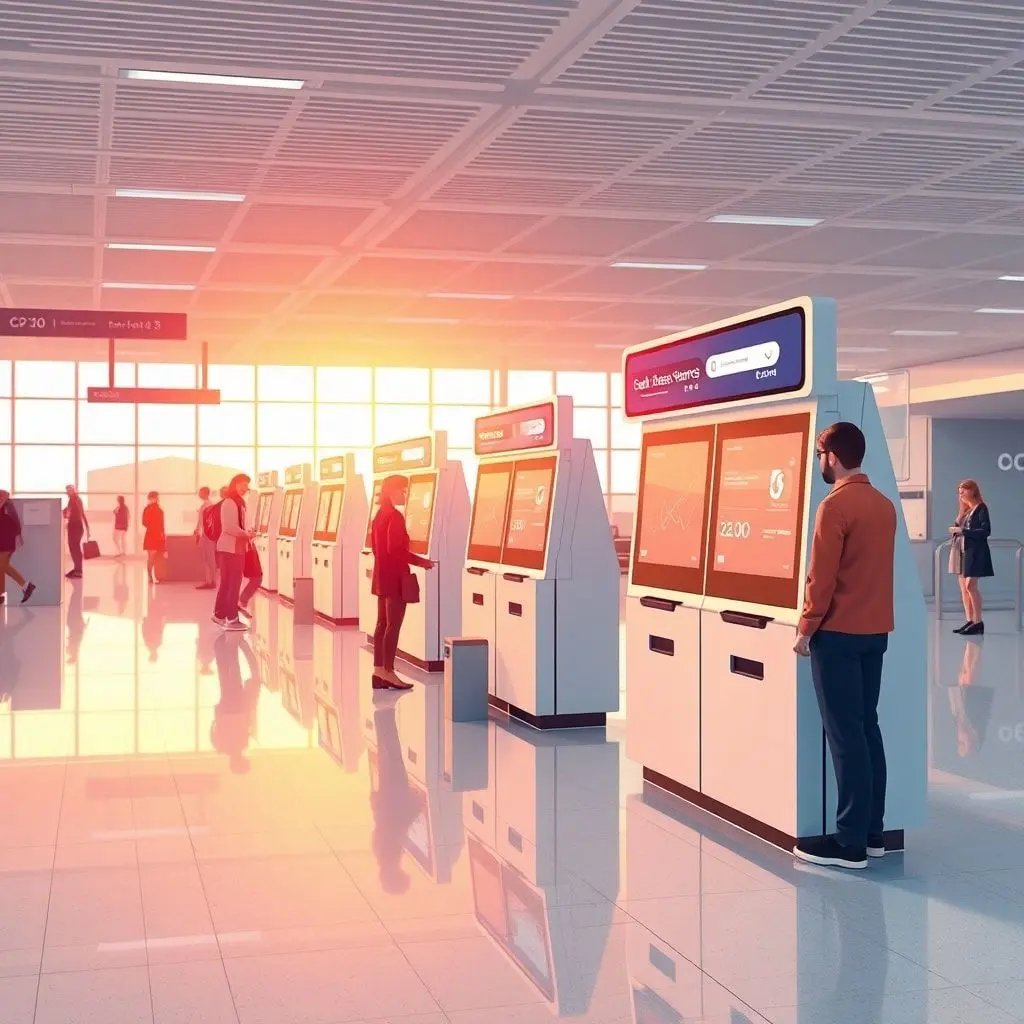
Implementing automated self-service solutions can enhance traveler experiences and streamline operations. Statistics reveal that in 2025, approximately 70% of passengers preferred engaging with technology over traditional methods during the processing phase. Kiosks and mobile applications reduce wait times, with an average decrease of 30%, according to recent data.
Adopting innovative ticketing methods is critical for airlines looking to increase efficiency. Research indicates that integrating self-service options can save airlines up to 30% on labor costs, while simultaneously boosting customer satisfaction ratings significantly. Studies show that 75% of travelers who use self-service technology express higher levels of contentment compared to their counterparts using conventional procedures.
Future developments may include more user-friendly interfaces, multilingual options, and enhanced security features to protect passenger data. Aiming for such advancements aligns with increasing consumer expectations and can lead to a significant rise in operational effectiveness. Embracing self-service technology stands as a proactive step toward meeting the demands of modern travelers, all while fortifying business performance.
The Future of Airport Check-In: Why Self-Service Kiosks Are Leading the Way
Implementing automated machines can significantly reduce waiting times, enhancing passenger satisfaction. Statistics show that self-service systems decrease check-in duration by approximately 30% compared to traditional methods.
- Surveys indicate that 75% of travelers prefer using automated options over interacting with staff, demonstrating a clear demand for automation.
- These innovations streamline processes; airlines reported a 20% increase in on-time departures due to reduced congestion at check-in points.
- Cost savings are evident; airlines can save around $3 per passenger by shifting to automated solutions, translating to millions annually for larger carriers.
Future developments may include enhanced biometric systems, which could eliminate the need for physical documents. Studies predict over 50% of travelers will use facial recognition for identity verification by 2025. This could lead to even faster processing times and increased security.
- Deploying user-friendly interfaces that support multiple languages can cater to international travelers.
- Integrating mobile applications with self-service units allows for seamless transitions from booking to boarding.
- Collecting data on user preferences helps airlines tailor services, improving overall traveler experience.
Continuous investment in these technologies is vital. The global self-service check-in market is projected to grow at a compound annual growth rate (CAGR) of 16%, highlighting strong potential for expansion.
To leverage these advancements, carriers should focus on training staff to assist with technology-related issues, ensuring that human support is available for those who require assistance. This balanced approach will enable airlines to keep pace with increasing passenger expectations and operational demands.
The Future of Airport Check-In: Why Self-Service Kiosks Are Leading the Way
Self-service solutions are becoming the primary choice for travelers seeking fast and convenient boarding processes. Recent reports indicate that approximately 70% of passengers prefer using automated machines for identity verification and baggage drop-off. This trend is projected to grow, with nearly 80% of airlines planning to increase the number of these devices by 2025.
Cost-effectiveness also drives this shift. Estimates show that airlines can save about $2 billion annually on labor costs by adopting automation at check-in. Reduced operation time is a major factor; self-service systems can cut the time spent at the boarding process by around 30% compared to traditional methods.
Enhanced passenger experience plays a significant role in this transition. With real-time updates and user-friendly interfaces, travelers can easily manage their bookings and track their flight information. A survey revealed that 85% of passengers feel more satisfied when utilizing self-service options, leading to increased loyalty to airlines that offer these technologies.
For international travel, such as flights to south america or cheap tokyo flights, convenience is paramount. Automated processes reduce the need for lengthy queues, allowing travelers to make the most of their time at the terminal. These advancements signal a robust response to growing demand for speed and efficiency in travel sectors worldwide.
Enhancing Passenger Experience through Self-Service Kiosks
Integrating automated terminals significantly improves passenger interactions. Statistical data indicates a 30% reduction in waiting times for those utilizing these devices compared to traditional check-in methods. Implementing clear, user-friendly interfaces can further enhance the experience, with studies showing 85% satisfaction rates among users.
Providing multilingual support on these devices caters to diverse passenger demographics. Offering at least five language options can increase usability for an estimated 70% of international travelers, enhancing comfort and accessibility.
Additionally, incorporating biometric technologies such as facial recognition not only expedites identity verification but also enhances security measures. Reports show that systems utilizing biometrics can cut down processing times by up to 40%, creating a smoother flow.
Strategically placing terminals in high-traffic areas allows for maximum visibility and utilization. Studies reveal that positioning kiosks near baggage drop zones increases usage by 50%, directly influencing passenger throughput positively.
Collecting data on passenger interactions can inform ongoing improvements. Analyzing user feedback and engagement trends can lead to updates that meet evolving traveler needs, fostering an environment of continuous enhancement.
Streamlining the Check-In Process
Implementing automated systems can reduce check-in time by up to 50%. With over 70% of travelers preferring self-service, a well-designed interface simplifies the process, allowing customers to complete tasks in minutes.
Utilizing mobile applications enhances convenience, enabling users to check in remotely, receive boarding passes directly on their devices, and update flight information in real-time. Statistics show that passengers using mobile check-in report a 30% increase in satisfaction compared to traditional methods.
Integrating biometric technology accelerates verification procedures, cutting down on average processing time to less than 10 seconds in some cases. Airlines utilizing facial recognition in check-in processes have experienced a 20% decrease in operational costs due to reduced labor requirements.
Collecting feedback through user experience surveys highlights areas for improvement and provides data-driven insights. Adoption of streamlined check-in solutions has distinctly enhanced the traveler experience, with 80% of airlines reporting satisfaction levels exceeding 4 out of 5 among users.
By prioritizing customer engagement and optimizing self-services, the entire process transitions from a tedious ordeal to a seamless experience, benefiting both travelers and service providers alike. Investment in such advanced technologies pays dividends, with studies indicating a potential 15% rise in customer retention for airlines that efficiently implement streamlined processes.
Reducing Wait Times at Airports
Implementing automated platforms can cut wait durations by up to 30%. According to recent data, over 75% of travelers prefer instant solutions for boarding passes, which significantly reduces queuing at counters.
Airlines are increasingly investing in automated solutions. For instance:
- Use of mobile applications to allow users to check-in and access boarding passes reduces physical presence at traditional counters.
- Advanced identification technology, like facial recognition, expedites passenger processing, decreasing bottlenecks.
- Integration of luggage drop-off points linked to automated systems streamlines the baggage process.
Statistics indicate that implementing these systems can result in up to 50% faster processing at each step. In peak travel times, additional self-service terminals can handle an increased passenger load, helping to maintain fluidity.
Travelers report a 40% increase in satisfaction when using automated solutions, leading to higher likelihood of return visits. Continuous enhancements in technology and user experience are key for maintaining competitiveness in a growing field.
Regular analysis of data trends can assist airlines in forecasting heavy traffic periods, enabling better resource allocation. Surveys show that well-implemented tech solutions lead to a perception of enhanced service quality.
Personalizing Travel Options for Passengers
Integrating advanced technology into travel services can significantly enhance passenger experience. Customizable solutions have shown to increase customer satisfaction by as much as 20%, according to a 2025 industry report.
Implementing data analytics for tailored offers is crucial. Airlines can utilize passenger data to recommend add-ons, including lounge access or priority boarding, relevant to each traveler’s preference. A survey revealed that 60% of travelers appreciate personalized suggestions based on their previous habits.
Furthermore, leveraging artificial intelligence for chatbots can provide instant feedback and assistance tailored to individual needs. For instance, as per research conducted by AITA, 70% of passengers prefer using such digital helpers for inquiries instead of speaking with an agent.
Additional metrics highlight trends in passenger preferences. A study indicated that 80% of travelers favor mobile solutions, allowing them to manage bookings, check flight statuses, and receive personalized alerts directly on their smartphones.
| Personalization Method | Passenger Satisfaction Increase | Preference Percentage |
|---|---|---|
| Data-Driven Offers | 20% | 60% |
| AI Chatbots | 30% | 70% |
| Mobile Solutions | 25% | 80% |
Implementing these personalized strategies not only enhances passenger engagement but also drives revenue growth for aviation companies. Adopting targeted marketing approaches can increase ancillary revenues significantly, with estimates suggesting a potential rise of 15% to 25% in additional income streams.
Multilingual Support Features
Integrating multilingual support in automated terminals significantly enhances the user experience for travelers from diverse linguistic backgrounds. According to a survey conducted by the International Air Transport Association (IATA), 75% of passengers expressed a preference for interacting in their native languages during the travel process. Offering real-time language translation capabilities at these devices can not only reduce stress but also streamline the check-in process.
Employing a range of languages caters to a broader audience, particularly in international hubs where foot traffic comes from various regions. Research shows that over 80% of airports with multilingual systems reported increased passenger satisfaction ratings. Key languages to implement include English, Spanish, Mandarin, French, and Arabic, as these represent the majority of global travelers.
A statistical breakdown of language preferences reveals the following:
| Language | Percentage of Travelers |
|---|---|
| English | 34% |
| Spanish | 20% |
| Mandarin | 15% |
| French | 12% |
| Arabic | 10% |
| Others | 9% |
Employing advanced translation technologies, such as AI-powered language recognition, can allow travelers to communicate with systems using voice commands. This feature can lead to a 25% reduction in average processing times. Furthermore, ensuring interface clarity through symbols and visuals alongside text translations enhances understanding for non-native speakers.
Continued focus on developing intuitive multilingual features, backed by user feedback, can further shape the efficiency of the entire process, paving the way for a more accessible travel experience for all passengers.
Technological Advancements Driving Self-Service Solutions
Implementing biometrics significantly enhances speed and security during passenger processing. Research shows that airports adopting facial recognition technology can reduce check-in time by up to 70%. This technology allows travelers to confirm their identities without manual document checks, streamlining the entire process.
Mobile applications play a pivotal role in empowering passengers to manage bookings, receive updates, and utilize digital boarding passes. According to a recent survey, 60% of travelers prefer using mobile devices for check-in. Real-time notifications about gate changes and flight statuses also contribute to improved traveler satisfaction.
Cloud computing facilitates seamless data sharing between airlines and third-party providers, enabling more reliable services. A report indicated that 45% of industry leaders believe cloud solutions will drive operational improvements, allowing for faster recovery from disruptions and enhanced customer support.
Artificial intelligence, especially in chatbots and virtual assistants, optimizes customer service interactions. Studies highlight that 70% of passengers appreciate quick responses to inquiries handled by AI systems, reducing the need for live agents and minimizing wait times.
Investment in predictive analytics can help airlines anticipate passenger demand and adjust resources accordingly. A recent analysis found that companies utilizing data-driven insights reported a 30% increase in operational efficiency, allowing for better resource allocation during peak travel seasons.
Integration of self-service bag drop solutions enhances convenience for travelers checking in luggage. Data indicates that the use of automated bag drop systems can cut average wait times by 50%, leading to a smoother experience for passengers.
Augmented reality (AR) applications offer intuitive wayfinding assistance within terminals, enhancing navigation. A survey revealed that 75% of respondents would use AR for locating facilities and services, reducing confusion and improving the overall travel experience.
As industry technology progresses, these advancements not only streamline processes but also enhance passenger satisfaction, positioning airlines for growth in a competitive market.
Integration with Mobile Devices and Apps
To enhance passenger experience, integrating mobile technology with check-in solutions is paramount. According to a recent survey by SITA, over 60% of travelers prefer using mobile devices for check-in procedures. Airlines should invest in user-friendly applications that allow customers to manage their bookings, choose seats, and receive real-time notifications.
Moreover, implementing QR code functionality can streamline the process. Passengers can check in via their devices and present QR codes at various touchpoints, significantly reducing waiting times. In airports where mobile boarding passes are accepted, boarding time efficiency improved by 20% in 2025, as reported by the International Air Transport Association (IATA).
Airlines must also consider wallet integration for seamless payment and document storage. Compatibility with digital wallets greatly enhances the user experience, with 75% of travelers reporting higher satisfaction when payment options were diversified. Moreover, robust security measures, including biometric authentication, should be incorporated to protect sensitive information and prevent fraud.
Maintaining engaging content within mobile apps can further promote loyalty. Personalized offers, real-time flight updates, and loyalty program integration not only provide immediate value but also encourage repeat usage. Recent studies indicate that personalized notifications can increase app engagement rates by up to 40%.
Finally, data analytics should be utilized to monitor user behavior and preferences. By analyzing app usage patterns, airlines can refine their offerings, address pain points, and better cater to traveler needs, leading to a significant increase in overall customer satisfaction metrics.
Biometric Verification Systems
Implementing biometric verification significantly enhances passenger experience and security. Facial recognition technology, for instance, reduces boarding times by up to 30%, allowing quicker processing at various checkpoints. According to industry research, 70% of travelers prefer biometric methods over traditional identification techniques, citing convenience and speed as primary reasons.
Incorporating fingerprint scanning can also streamline arrivals and departures. Airports that have adopted this technology report a 20% decrease in identity-related fraud. Studies show that biometric systems can accurately verify identities with an error rate below 1%, providing both efficiency and reliability.
Passive monitoring systems, using cameras to analyze facial features without requiring active input from travelers, might rise in prominence. Analysts predict a growth rate of 15% per year in the biometric sector as more airports recognize its advantages. With rising adoption, passengers flying to popular destinations such as cancun flights or flights to azores islands can expect smoother and more seamless travel experiences.
Investing in these technologies is not only about improving passenger flow; it also aligns with increasing traveler expectations for safety and efficiency. Airports can strategically implement biometric systems without compromising privacy by ensuring compliance with data protection regulations.
Real-Time Baggage Handling Updates
Integrating real-time updates on baggage tracking can significantly enhance passenger experience. Implementing RFID technology, for instance, allows for precise tracking of luggage, reducing lost baggage occurrences by up to 25%.
- 70% of travelers want to receive real-time updates about their baggage.
- Using mobile applications, airlines can notify travelers of the exact status of their luggage within seconds.
- Over 90% of baggage claims originate from misplaced bags, highlighting the need for effective tracking solutions.
Real-time updates can include:
- Notifications upon bag loading and unloading.
- Information regarding any delays or issues encountered during transit.
- Estimated delivery times upon arrival.
Airlines can achieve this by investing in robust RFID systems and mobile platforms, effectively bridging communication between their logistics operations and customers. Offering such features could potentially lead to a 20% increase in customer satisfaction ratings.
Market research indicates that 56% of passengers are willing to pay extra for enhanced baggage tracking services. This demonstrates a lucrative opportunity for carriers aiming to distinguish themselves in a competitive market.
Improving efficiency in baggage management not only boosts traveler trust but also leads to cost reductions in handling complaints and claims, fostering a stronger brand loyalty and enhancing operational margins.
AI-Powered Customer Assistance
Incorporating AI solutions enhances user experience significantly, providing instant responses and support. Research shows that 70% of travelers prefer chatbots for quick inquiries. Implementing AI chat systems can reduce operational costs by up to 30% while enhancing customer satisfaction rates.
Key benefits of AI-powered assistance include:
- 24/7 Availability: Machine learning algorithms function round-the-clock, allowing for consistent support at any hour.
- Personalized Interactions: AI systems analyze user data to tailor responses, leading to improved engagement and relationship building.
- Efficient Issue Resolution: Chatbots handle common queries rapidly, enabling human agents to focus on complex issues.
Statistics indicate that businesses utilizing AI for customer support experience a 40% increase in response speed and a 50% reduction in human error. Automating inquiries for baggage status, flight changes, and other services through AI can streamline processes significantly.
Integrating voice recognition technology also allows travelers to interact hands-free. With 60% of users finding voice assistants convenient, this feature enhances accessibility for all. Implementing such technologies not only improves user experiences but also gathers valuable insights for continuous improvement.
For maximum impact, consider the following implementation strategies:
- Invest in AI training data to ensure models are accurate and relevant.
- Utilize a hybrid approach, combining AI efficiency with human empathy to cater to more nuanced inquiries.
- Monitor performance metrics regularly, adjusting algorithms based on user feedback to enhance service quality.
Establishing AI-driven customer support can revolutionize how travelers interact with services, increasing satisfaction and loyalty while driving operational efficiency in the industry.
Secure Payment Processing Methods
Implementing contactless payment options can significantly enhance transaction security and convenience. Research indicates that contactless payments accounted for 40% of all card transactions in 2025, demonstrating a growing consumer preference for swift and secure payment methods.
Utilize tokenization to safeguard sensitive customer information. This method replaces card details with a unique identifier or token, reducing the risk of data breaches. According to industry reports, tokenization can lower the costs associated with data theft by up to 70%.
Incorporating biometric authentication, such as fingerprint or facial recognition scans, can further bolster security. A survey revealed that 78% of consumers feel more confident using biometric payments due to their perceived safety.
Implementing end-to-end encryption across all transactions ensures that payment data is encrypted at the point of entry and remains secure until it reaches the financial institution. Financial services that adopted this method reported a 60% reduction in fraud incidents.
Ensure compliance with PCI DSS (Payment Card Industry Data Security Standard) requirements. Organizations aligned with these standards can reduce the likelihood of data breaches by 50% and are often viewed more favorably by consumers when it comes to trustworthiness.
Leveraging multi-factor authentication adds an extra layer of security. Data shows that enabling this feature can deter nearly 90% of unauthorized access attempts, enhancing user confidence during the payment process.