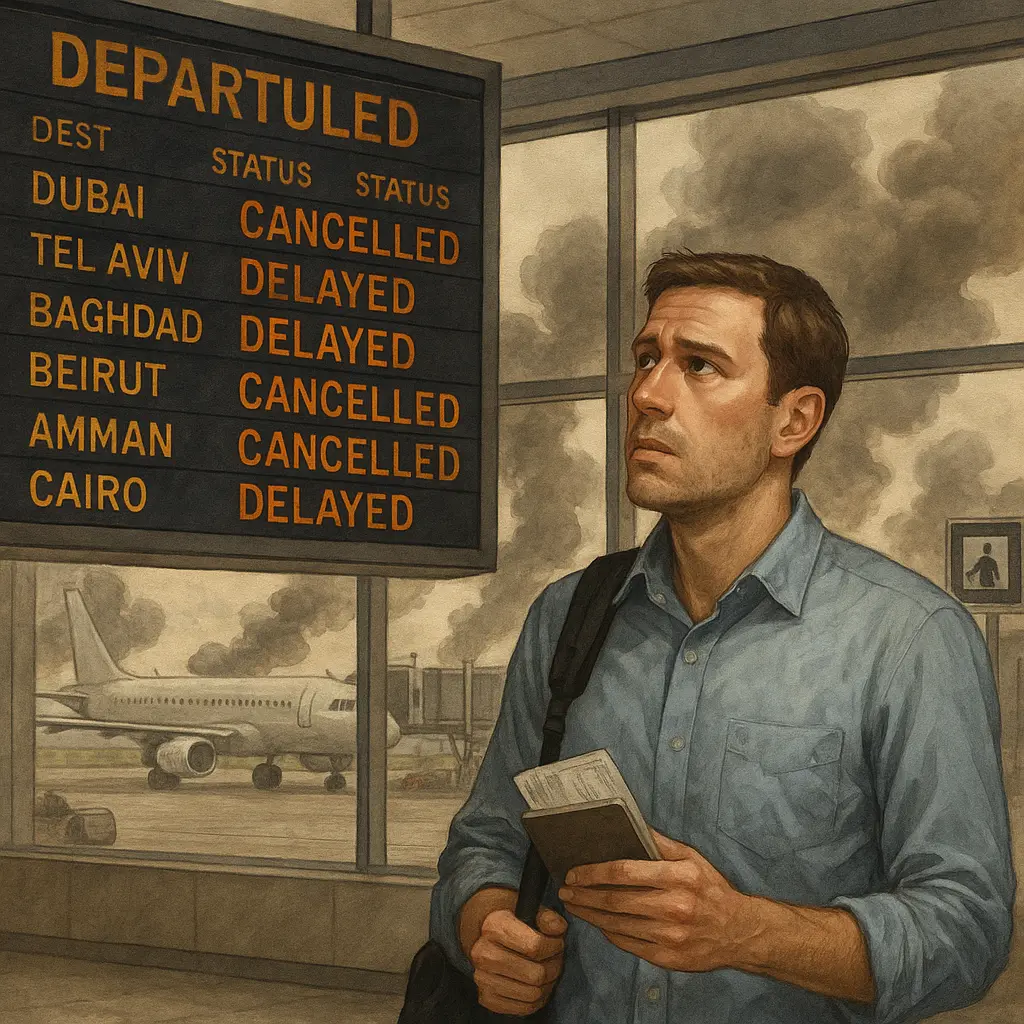
A cyberattack targeting U.S.-based Collins Aerospace disrupted check-in systems at several major European airports, forcing airlines to cancel and delay flights for a second day.
Airports Affected
- Brussels Airport: Hardest hit, asked airlines to cancel nearly 140 departing flights on Sunday — about half of its schedule.
- Berlin Brandenburg & London Heathrow: Experienced disruptions but showed signs of recovery by Sunday.
- Other European airports reported no major impact.
What Happened?
- The attack affected Collins Aerospace systems used for:
- Passenger check-in
- Boarding pass and bag tag printing
- Baggage dispatch
- The company described the incident as a “cyber-related disruption” and confirmed only select airports in Europe were impacted.
- Manual alternatives like handwritten boarding passes and backup laptops were used to keep operations moving.
Brussels Airport Response
- Saturday: 25 flights canceled
- Sunday: 50 flights canceled
- Today (Sunday total): Nearly 140 departing flights canceled
Despite this, the airport said it maintained 85% of scheduled departures by deploying extra staff and relying on online check-in and self-service bag drop systems.
Airport spokesperson Ihsane Chioua Lekhli emphasized that only desk check-in systems were affected, not kiosks or online options.
Safety Not Impacted
The European Commission confirmed aviation safety and air traffic control were not compromised by the cyberattack.
Passenger Advice
Airports advised travelers to:
- ✅ Check flight status before heading to the airport
- ✅ Use online check-in and self-service kiosks where available
- ✅ Allow extra time for manual check-in if needed
Berlin Brandenburg Airport warned passengers via its website of longer waiting times, urging the use of fast bag drop services.