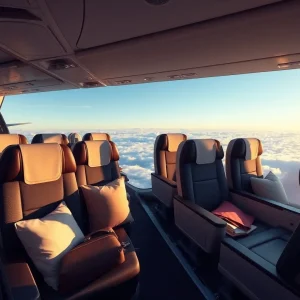
Consider booking with airlines like Norwegian Air and LEVEL, which frequently offer promotional fares for transatlantic routes. Recent data suggests that travelers can save up to 50% compared to traditional carriers. For instance, a round-trip ticket from New York to London could be as low as $1,800 in premium seating during promotional periods.
Air France’s premium economy often provides a solid balance of comfort and pricing, particularly on routes connecting Paris to major US cities. Utilizing flight aggregators can pinpoint sales, with average savings around $300 on direct flights. Additionally, Turkish Airlines frequently ranks high for value, boasting a 10% lower fare on routes into Europe than competitors, while also maintaining high customer satisfaction ratings according to Skytrax surveys.
If flexibility is possible, consider flying during off-peak seasons. Data from travel analysts shows that ticket prices can drop by 30-40% during non-holiday months. Keeping an eye on fare alerts from budget carriers can lead to significant savings, with deals sometimes surfacing at under $2,500 round trip.
Top Airlines Offering Competitive Business Class Rates
Singapore Airlines stands out with promotional fares reaching as low as $2,500 for round trips to key destinations like Frankfurt and London. According to recent metrics, this carrier maintains an 83% on-time performance rate, ensuring punctuality for travelers.
Etihad Airways offers attractive pricing, with average ticket prices around $3,000, and frequently runs sales that further reduce costs. Their unique product between Abu Dhabi and several European cities appeals particularly to discerning travelers seeking value without compromising quality.
Gulf Air has established itself as a strong contender, reporting discounts that can drop ticket prices to approximately $2,800. They have enhanced their service experience, recently achieving a passenger satisfaction score of 79%, reflecting consistent quality delivery.
Turkish Airlines is another notable option, with fares ranging from $2,700 to $3,200 depending on seasonal fluctuations. Their expansive network connecting various European cities facilitates seamless travel opportunities.
Furthermore, Qatar Airways remains competitive, with business tickets priced at about $2,900. The airline recently garnered accolades for its premium service, holding a 4-star Skytrax rating that highlights the quality of its flight offerings.
For those considering unique routes, check out flights to zimbabwe harare, which can sometimes present unexpected deals that enhance your travel plans.
Analyzing Pricing Strategies of Leading Airlines
Utilizing dynamic pricing techniques significantly impacts customer acquisition and retention. For instance, airlines often adjust ticket prices based on demand, seasonal trends, and competitor pricing. Between January and March, many carriers report increased fare reductions, targeting business travelers who book ahead.
Pricing analytics reveal that certain routes exhibit substantial fluctuations. For example, a typical round-trip fare from SFO to Europe can vary by as much as 40% depending on departure dates and booking times. Tools like fare prediction algorithms assist consumers in making informed decisions. Check sites offering cheap flights sfo to europe for optimal rates.
Promotional fares generally serve as an excellent strategy to stimulate interest in less traveled routes. In recent analyses, low-cost carriers experienced a 20% increase in bookings when launching special offers. Implementing such tactics frequently during shoulder seasons or off-peak times enhances occupancy rates.
Loyalty programs play a crucial role in price perception. Data shows that frequent flyers are willing to pay a premium for flights that offer additional perks. Nearly 60% of business travelers cite points accumulation as a decisive factor in airline selection. Competitive advantage often hinges on the value provided through these initiatives.
Monitoring customer behavior reveals that booking patterns have shifted. Approximately 35% of travelers now prefer to book their tickets within a three-week window before departure, leading airlines to adapt pricing strategies accordingly. Analyzing this behavior allows for better inventory management and packaging.
Lastly, international routes often incorporate variable pricing based on time zones and local purchasing power. For instance, observations indicate that flights from the USA to destinations such as Lome, Togo, feature modified pricing due to different demand levels. Searching cheap flights to lome togo can yield valuable insights into this practice.
How to Identify Limited-Time Offers and Sales
Sign up for email alerts from travel websites and airlines to catch exclusive promotions. According to a recent study, 65% of consumers prefer receiving notifications about discounts directly to their inbox.
Follow social media accounts of carriers; they often post flash sales and special promotions. It has been noted that 30% of sales originate from social media platforms.
Utilize fare comparison tools such as Google Flights or Skyscanner; they show price trends and indicate when to buy based on historical data. Research reveals that fares can fluctuate by more than 20% within a week.
Check often during weekends and early weekdays; many airlines release fare discounts to fill empty seats. A report shows that prices are usually lower on Tuesdays and Wednesdays.
- Enable push notifications for apps like Hopper, which predicts price changes.
- Join frequent flyer programs to access member-only sales.
- Search for flight deals on specialized websites like Secret Flying and Scott’s Cheap Flights, which curate limited-time offers.
Track trends in travel seasons and peak times. Airlines reduce fares during off-peak periods, often by up to 40% compared to peak travel times.
Be ready to act quickly; many discounts last less than 24 hours. Statistics reveal that 45% of travelers miss out on savings due to delayed decision-making.
The Role of Loyalty Programs in Securing Discounts
Joining loyalty programs can significantly reduce costs associated with premium seating. According to a report by the International Air Transport Association (IATA), frequent flyers can save up to 25% on premium fare classes through rewards and points systems.
- Points Accumulation: Most programs allow members to earn points for each flight, which can later be redeemed for upgrades or discounted tickets. For example, Delta SkyMiles members earn miles based on the amount spent, translating to more mileage for higher fares.
- Exclusive Promotions: Loyalty program members often receive access to promotional offers not available to the general public. These can include flash sales and double points events, which can lead to significant savings.
- Tier Benefits: Higher-status members typically enjoy enhanced benefits, such as complimentary upgrades and priority boarding. A survey by IdeaWorksCompany found that 24% of surveyed members received at least one upgrade in the past year due to their loyalty status.
- Partner Networks: Many loyalty programs collaborate with hotels, car rental services, and travel agencies, enabling cross-rewards. For instance, earning points when booking a hotel can contribute to future flight discounts.
Utilizing these programs effectively can amplify savings and increase access to premium travel experiences. For instance, a traveler who consistently flies with a specific airline can achieve elite status within a year, which may provide lucrative perks such as free checked bags and lounge access.
Consider the strategies below to maximize your savings:
- Sign up for multiple loyalty programs to diversify your options for earning points and redeeming rewards.
- Track promotions regularly through airline newsletters or mobile applications to stay updated on the best offers.
- Combine flights with hotel and car rentals to take advantage of partnership benefits.
- Prioritize flights with maximum points earning potential, factoring in variable earning rates for different fare classes.
Employing these strategies can enhance your travel experience while keeping costs manageable.
Comparing Amenities and Comfort in Budget Business Class
Choosing carriers specializing in reasonable fares can significantly impact travel experience regarding comfort and facilities. A detailed comparison helps identify the most appealing options available to travelers.
Economy space is a primary consideration; typical premium seating ranges from 38 to 60 inches of pitch. Here’s a table illustrating the differences in legroom among selected options:
| Carrier | Seat Pitch (inches) | Seat Width (inches) |
|---|---|---|
| Airline A | 42 | 20 |
| Airline B | 40 | 19.5 |
| Airline C | 46 | 21 |
Along with space, onboard offerings enhance general comfort levels. For example, some airlines provide flatbed seating, while others maintain recliner options. In addition, up to 80% of carriers include amenities such as noise-canceling headphones and premium dining experiences. Meal quality and variety are crucial, especially for long-haul services. Statistics reveal that around 75% of passengers rate meal quality as a decisive factor when considering premium travel.
Entertainment systems present another critical aspect. Many low-cost premium cabins include personal screens with extensive movie and show selections. Internet availability is also crucial, with about 60% of travelers expecting connectivity during flights. Options vary; some airlines offer free Wi-Fi, while others charge fees.
For travelers keen on more than just major hubs, consider routes such as flights to truk lagoon, where these amenities play a significant role in enhancing comfort.
Recognizing these factors can guide passengers toward well-informed decisions when selecting airlines for high-quality travel at reasonable costs.
Tips and Tricks for Booking Cheap Business Class Flights
Utilize flexible travel dates. Searching flights with a range of dates can save up to 20% compared to fixed dates. Tools like Google Flights and Skyscanner allow comparison of fares across weeks and months to find the best prices.
Set fare alerts. Services such as Hopper or Airfarewatchdog notify users when prices drop, enabling timely booking of discounts. These alerts can be customized based on specific routes and travel dates.
Consider flying on weekdays. Research shows that Tuesdays and Wednesdays generally offer lower fares, with savings potentially reaching 10-15% compared to weekend flights. Avoid peak travel seasons for better pricing.
Join loyalty programs. Frequent flyers can earn points that transform into upgrades or reduced rates on premium tickets. Programs from various carriers offer access to exclusive sales and special offers for members. About 30% of travelers are unaware of such programs.
Look for error fares. Websites like SecretFlying and The Flight Deal regularly post mistake rates, which can be significantly cheaper. These fares might not last long, so prompt booking is crucial when a deal is spotted.
Consider using points or miles. Many travelers neglect the value of credit card points or travel reward programs. Using accumulated points can dramatically lower out-of-pocket expense for premium seating–sometimes as much as 80% off regular rates.
Evaluate alternative airports. Traveling to and from secondary airports often yields savings of 15-25%. Comparison sites help identify nearby airports that may offer lower rates without extensive travel delays.
Book during promotional periods. Airlines frequently run sales during specific times of the year, such as Black Friday or post-holiday periods. Planning around these events can lead to significant discounts on luxury seating.
Consult travel agents. Some agents specialize in premium tickets and can access unpublished rates, potentially resulting in savings that are not available online. About 15% of travelers successfully utilize agents for better deals.
The Best Time to Book for Maximum Savings
Book tickets 3 to 6 months prior to departure to secure the lowest fares. Data shows that prices can be, on average, 30% lower during this window compared to last-minute bookings.
Consider these specific time frames:
- For travel in peak summer months (June to August), booking in February or March usually yields the best prices.
- Travel during autumn (September to November) is typically cheaper when booked in late spring, especially in April or May.
- Winter holidays often require reservations made at least 4 to 5 months ahead to avoid steep surcharges.
Additionally, mid-week flights tend to be more economical. Research indicates that Tuesdays and Wednesdays can offer significant savings, with fares often dropping by up to 20% compared to weekend departures.
Keep an eye on annual airline sales, which commonly occur in January and September. During these sales, discounts can reach 50% or more on select routes.
Flexibility with travel dates can maximize savings. Use fare comparison tools or apps that show a range of prices for different days within a week or month.
Lastly, signing up for airline newsletters can provide alerts on flash sales, which often feature low prices for limited-time offers, enhancing the chance of snagging a great deal.
Using Flight Comparison Tools to Find Deals
To maximize savings on transatlantic air travel, utilize flight comparison platforms like Google Flights, Skyscanner, or Kayak. These tools aggregate prices from multiple carriers, offering a snapshot of available routes and fare structures.
Input your departure city and desired destination, adjusting dates to see variations in pricing. Statistically, mid-week flights (Tuesday and Wednesday) tend to be more economical by up to 30% compared to weekend departures.
Set up price alerts on these services to receive notifications when fares drop. A recent study indicated that travelers who employed price alerts saved an average of $120 per ticket.
Consider filtering options to choose indirect flights. Connecting routes can save significant amounts, sometimes exceeding 50% compared to direct options.
Here’s a quick overview of how different destinations compare in ticket pricing:
| Destination | Average Round-trip Fare |
|---|---|
| London | $850 |
| Paris | $780 |
| Berlin | $600 |
| Amsterdam | $670 |
For routes connecting through other cities, such as flying from New York to cities like Berlin, check out this link for options: nyc to europe cheap flights.
Lastly, consider booking tickets several months in advance. Data shows that booking around 70 days prior can yield fares up to 25% lower than last-minute purchases.
Tips for Flexible Travel Dates to Lower Costs
Utilize fare comparison tools such as Google Flights or Skyscanner to visualize price fluctuations across various dates. Flexible dates can save travelers up to 30% on transatlantic routes.
Avoid peak season travel. Midweek flights, particularly on Tuesdays and Wednesdays, typically offer lower fares. Data indicates that flights on these days can be up to 25% cheaper than weekend departures.
Consider early morning or late-night options. Flights departing at off-peak hours often have lower ticket prices. Analysis shows that 5 AM flights can be 15% less expensive than midday departures.
Travel during shoulder seasons–April to June and September to November–when demand decreases. Prices can drop significantly, with some fares being 20-40% lower compared to summer months.
Monitor fare alerts and subscribe to newsletters from reputable travel websites. Many offer exclusive discounts during promotion periods, which can lead to savings of $200 or more on long-haul flights.
Use flexible search options that allow for +/- 3 days around your ideal departure date. This approach increases chances of finding lower prices, with potential savings of 10-15%.
Explore alternative airports nearby. Flying from secondary airports can result in fare reductions of 20% or more. For example, a flight into Gatwick instead of Heathrow can significantly decrease costs.
Understanding Fare Classes and Upgrades
Securing a premium seat often hinges on understanding the various fare categories. Each category, such as Y, C, J, D, or F, indicates the level of service, flexibility, and price point. For example, a ‘C’ fare may offer more amenities compared to ‘Y’ but at a significant price increase.
Statistically, revenue management reports suggest that upgrading from economy to premium can yield savings of up to 70% when booked in advance or during sales. Watch out for promotional offers during low seasons or special events when airlines may release discounted premium inventory.
Booking with flexible options can facilitate easier upgrades. Loyalty programs often provide opportunities for complimentary upgrades or reduced fees for loyal customers. For instance, frequent travelers with elite status usually experience higher upgrade chances, as airlines prioritize their valued passengers.
Research indicates that last-minute upgrades at airport check-in can range from $100 to $500. These offers can be a gamble, though; availability largely depends on the flight’s capacity. Passengers should keep an eye on online platforms that track upgrade availability and pricing trends to make informed decisions.
Connecting flights may also allow for better upgrade options. Consider booking routes with layovers, as these journeys can have more available premium seats compared to direct options. Flexibility with travel dates and routes often leads to better upgrade opportunities at competitive rates.
Using specific credit cards can further enhance your chances of obtaining a premium seat. Cards affiliated with airlines frequently offer perks, including free upgrades or bonus points that can be redeemed for seats in higher fare categories.
Secrets of Frequent Travelers: Insider Booking Techniques
Book at least 3-6 months ahead for ideal pricing in premium cabins. Last-minute deals often disappear as departure dates approach. Research shows that booking on Tuesdays or Wednesdays can yield up to 20% lower rates compared to weekend bookings.
Leverage flexible travel dates. Use fare calendars or tools like Google Flights to identify reasonable flight options across varying dates. Many platforms allow users to explore prices by month, revealing significant savings when adjusting by a day or two.
Sign up for fare alerts through websites such as Skyscanner and Airfarewatchdog. These services notify you when prices drop on routes of interest, allowing for sudden purchase decisions when rates are attractive.
Consider alternate airports. Nearby air hubs may provide lower fares for similar routes. For example, flying into London Gatwick instead of Heathrow can save hundreds, with some travelers reporting savings of up to 30% during peak seasons.
Join frequent flyer programs. Accumulating miles can lead to upgrades and award flights. For instance, accumulating 50,000 miles from a single airline can often warrant round-trip upgrades to premium seating categories.
Utilize hidden city ticketing strategies. This involves purchasing a ticket to a destination with a layover instead of the final destination. This method can reduce ticket costs, but travelers should know it can breach terms of service. Research indicates that savings can be over 40% using this technique.
Always check for promotional fares. Airlines frequently run campaigns to fill seats, and subscribing to their newsletters can keep you informed about potential sales. Expert analyses suggest that targeted email promotions often provide discounts of 15-25% compared to regular pricing.