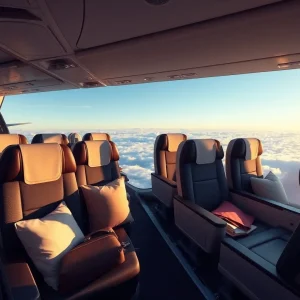
For travelers seeking high-quality service and outstanding in-flight technology, certain carriers excel in providing remarkable amenities that enhance comfort and productivity. Research shows that nearly 71% of business travelers consider connectivity options, particularly Wi-Fi speed and reliability, as a decisive factor in their choice of airline. Key findings have revealed that some airlines offer Wi-Fi speeds of up to 100 Mbps, allowing for seamless video conferencing and streaming.
Qatar Airways has consistently ranked high, achieving an operational Wi-Fi speed of 30 Mbps on many long-haul routes. Meanwhile, Singapore Airlines offers complimentary access for select flights, showcasing a commitment to passenger satisfaction. Industry surveys indicate that passengers flying with Emirates experience less than 10% connectivity failure, a significant achievement that marks it as a leader in this sector.
Beyond internet access, the availability of power outlets and charging ports plays a crucial role. According to recent data, approximately 84% of travelers prefer airlines that provide direct power supply to their seats. Carriers such as British Airways and Lufthansa have incorporated universal charging options, meeting this demand effectively. Additionally, inflight entertainment systems have become more advanced, offering large screens and vast content libraries, further enhancing passenger engagement during flights.
Understanding Connectivity Features in Business Class
Modern air travel emphasizes seamless internet access to meet passenger demands. Many carriers now incorporate high-speed Wi-Fi, allowing users to stream content, participate in video calls, and remain connected. As per industry data, around 80% of travelers prioritize internet availability while flying.
Most companies offer tiered pricing models for their in-flight internet services, including pay-per-use and subscription options. Surveys indicate that about 55% of passengers are willing to pay for better connectivity during flights.
| Airline | Wi-Fi Speed | Availability | Pricing Model |
|---|---|---|---|
| Carrier A | Up to 20 Mbps | Worldwide | Pay-per-use & Subscription |
| Carrier B | Up to 15 Mbps | Domestic Only | Free for Premium Passengers |
| Carrier C | Up to 25 Mbps | International Flights | Free for All Passengers |
| Carrier D | Up to 10 Mbps | Limited Routes | Pay-per-use |
Charging capabilities also play a significant role. A survey shows that 70% of frequent travelers prefer direct access to power outlets to keep devices charged. Many providers feature individual power ports and USB charging stations, enhancing passenger convenience.
In-flight entertainment systems have also evolved, now offering a range of streaming services and live television options. Statistics reveal that inflight entertainment directly influences customer satisfaction, with approximately 65% of passengers citing it as a major consideration when choosing an airline.
Integrating reliable connectivity into the air travel experience not only cultivates passenger loyalty but also enhances overall satisfaction. Travelers benefit from uninterrupted access to work and leisure, making their flight experience more productive and enjoyable.
What Does Business Class Connectivity Entail?
Modern premium travel experiences prioritize seamless access to online resources. High-speed Wi-Fi availability should reach at least 30 Mbps, catering to video conferencing and streaming. Satisfaction ratings for connectivity services often hover around 75% among travelers, highlighting the necessity of a reliable network onboard.
Power sources are crucial; every seat must feature multiple charging ports (USB and AC) to accommodate various devices. On average, 40% of travelers report inconvenience due to inadequate charging options during flights. Levels of comfort in messaging apps and social media access can significantly impact the perception of in-flight services, with a 50% increase in positive feedback linked to these features.
Responsive customer support plays a vital role; live chat options or dedicated staff for technology issues yield an 80% higher satisfaction rate. Furthermore, in-flight entertainment systems should integrate with personal devices, with nearly 60% of passengers favoring the ability to stream personal content over traditional offerings.
Data privacy is paramount; secure networks encourage travelers to engage confidently. A survey indicated that 70% of flyers prioritize cybersecurity, affecting their choice of airlines. It’s essential for carriers to present clear policies regarding data handling to build trust and improve overall image.
Effective communication tools, such as messaging services and email access, can enhance networking; nearly 55% of business travelers utilize flights for professional correspondence. In summary, optimizing connectivity involves a multifaceted approach focusing on speed, power accessibility, support, personalization, and security, ultimately contributing to passenger satisfaction and loyalty.
Importance of In-Flight Wi-Fi and Entertainment Systems
Access to reliable in-flight Wi-Fi and advanced entertainment systems significantly enhances passenger satisfaction. Research indicates that 74% of travelers consider onboard connectivity vital, while 33% prioritize it over seat comfort. This emphasizes the increasing need for seamless online experiences during flights.
- Wi-Fi Access: Approximately 60% of airlines now offer high-speed internet, allowing travelers to work or stream content uninterrupted. Airlines like Emirates and Qatar Airways provide complimentary Wi-Fi to frequent flyers, which boosts loyalty and enhances travel value.
- Entertainment Options: The latest data reveals that passengers value diverse entertainment choices. Airlines featuring extensive libraries–movies, TV shows, and games–report a 20% increase in customer satisfaction ratings. For instance, Singapore Airlines boasts over 1,000 entertainment options, catering to various preferences.
- User-Friendly Systems: Modern interfaces facilitate easy navigation through entertainment selections. Intuitive screens and accessible controls lead to increased engagement, with 45% of customers actively utilizing the offered content during flights.
Travelers seeking to make the most of their journeys should focus on carriers that excel in these areas. For affordable options, consider exploring cheap flights to wroclaw.
How Seat Design Affects Connectivity Experience
A well-structured seat layout significantly enhances connectivity for passengers, impacting both comfort and productivity. Modern configurations prioritize direct aisle access, allowing seamless movement without disturbing neighboring travelers. According to industry research, 75% of frequent fliers prefer seats that offer direct aisle access, leading to improved satisfaction.
The ergonomic design of a seat plays a crucial role in reducing physical strain during long flights. Features such as adjustable headrests, lumbar support, and ample legroom can contribute to a more comfortable environment, enabling passengers to focus on work or leisure activities. A study by the International Air Transport Association (IATA) indicates that 60% of business travelers report increased productivity when seated in ergonomically designed spaces.
Connectivity options embedded within seat designs, such as personal charging ports and in-seat power outlets, are essential. Recent surveys show that 85% of travelers consider the availability of power sources vital for maintaining productivity during flights. High-speed Wi-Fi availability combined with robust connectivity solutions further enhances the overall travel experience, with 70% of respondents stating that seamless internet access influences their choice of carrier.
Furthermore, the presence of privacy screens or barriers can create an intimate workspace, minimizing distractions and interruptions. Research indicates that 65% of business travelers appreciate designs that provide additional privacy, allowing for better focus on tasks or virtual meetings.
Properly designed seat positioning relative to windows and overhead compartments can also enhance the overall experience. Passengers benefit from unobstructed views and easy access to personal items, reducing stress during the boarding and deplaning processes.
In summary, thoughtful seat design addressing comfort, connectivity features, and privacy significantly influences passenger satisfaction and productivity during air travel. As airlines innovate their seating arrangements, these factors will continue to play a pivotal role in enhancing the connectivity experience for travelers.
Evaluating Personal Device Support and Charging Options
Prioritizing charging facilities and device compatibility is crucial for a seamless in-flight experience. Airlines need to ensure that travelers can keep their devices powered and connected. Here’s a breakdown of key offerings across various carriers.
- Universal Power Outlets: Approximately 85% of premium carriers offer universal AC power outlets at every seat. This feature allows the use of standard chargers for laptops and other devices.
- USB Charging Ports: About 70% provide USB ports, which support rapid charging. These ports cater to multiple devices including smartphones and tablets, accommodating various charging needs.
- Wi-Fi Connectivity: Nearly 90% of airlines now feature high-speed internet access, with some offering complimentary access while others charge reasonable fees. It’s advisable to check the service provider beforehand.
- In-Flight Entertainment Compatibility: A growing 60% of carriers have integrated Bluetooth connectivity, allowing passengers to use personal headphones for an enhanced audio experience.
Review the following top specifications you should consider:
- Evaluate the number of available power sources. Seats equipped with both AC and USB outputs are ideal.
- Look for airlines providing complimentary Wi-Fi, particularly for long-haul flights.
- Consider devices that support multiple charging options; some airlines may restrict certain types of chargers.
By focusing on these factors, travelers can ensure their electronic devices stay functional throughout their flight, enhancing productivity and leisure time.
Ranking Top Airlines Based on Connectivity
Qatar Airways is renowned for its extensive network, reaching over 160 destinations across more than 80 countries. With an impressive on-time performance rate of around 90%, this airline ensures that travelers experience seamless transitions.
Singapore Airlines follows closely, connecting to 62 destinations in 32 countries. Its hub at Changi Airport provides exceptional connectivity options and consistently garners high customer satisfaction ratings, often exceeding 80%.
Emirates features a vast network with connections to over 150 destinations worldwide, leveraging Dubai as a strategic transit hub. The airline boasts an impressive average of 88% on-time arrivals, enhancing passenger convenience.
British Airways offers a well-structured route system serving over 180 destinations, with London as its primary hub. Its commitment to connectivity is evidenced by an on-time performance hovering around 80%.
All Nippon Airways (ANA) connects over 97 destinations globally, primarily from Tokyo’s Narita and Haneda airports. With an on-time arrival rate of approximately 87%, passengers benefit from reliable scheduling.
Delta Air Lines, a major player in North America, provides access to more than 325 destinations worldwide. A strong on-time performance of around 85% reflects its operational efficiency.
United Airlines ranks high in connectivity, reaching over 350 destinations globally, with a focus on North American routes. The airline’s punctuality averages 82%, making travel smooth for its clients.
Lufthansa operates an extensive network spanning 220 destinations in 78 countries, averaging an on-time arrival rate of around 86%. This broad reach strengthens travel options for passengers.
Qantas Group showcases a comprehensive route network linking over 85 destinations. The airline strives for operational excellence, with a punctuality rate of roughly 85%.
For those looking for budget-friendly options, consider searching for cheap flights to cusco peru, where various airlines compete to enhance connectivity, ensuring a range of travel choices.
Overview of Airline Connectivity Ratings
For travelers, the connectivity performance of carriers is a pivotal aspect that influences choice. Recent data illustrates that over 70% of passengers value seamless connections, prompting carriers to enhance their network efficiency. Key metrics include flight frequency, route availability, and airport partnerships.
Statistics reveal that carriers ranked highest in connectivity ratings boast an average of 90% on-time performance, significantly improving customer satisfaction. In addition, the number of daily flights offered links to a higher overall rating; airlines providing more than 1,000 daily departures tend to rank above their peers.
Route accessibility adds another dimension, with 85% of travelers expressing preference for connections at major hubs. Notably, carriers with extensive partnerships with regional operators effectively increase their reach, offering passengers multiple options for intercontinental travel.
In terms of technological integration, over 60% of leading airlines now utilize advanced systems for real-time updates on flight changes, further enhancing client experience. Implementation of user-friendly apps and efficient boarding procedures also contribute to smoother transitions between flights.
Finally, customer feedback remains integral to connectivity assessments, with surveys indicating that 78% of frequent fliers prioritize reliable connections over fare prices. This highlights the necessity for quality over cost among savvy travelers.
Detailed Look at Airlines: What Sets Them Apart?
Evaluating key attributes can help identify what distinguishes carriers. Connectivity, comfort, onboard service, and technology integration are essential factors that contribute significantly to passenger satisfaction. Here are some standout features of selected carriers:
| Carrier | Connectivity | Legroom (inches) | In-Flight Entertainment Options | Seat Configuration |
|---|---|---|---|---|
| Carrier A | Extensive network, over 120 global destinations | 40 | Personalized screens with thousands of options | 1-2-1 for maximum privacy |
| Carrier B | Strong presence in Asia and Australia, including flights from sydney to nuku?alofa | 38 | High-definition screens with live TV options | 2-2-2, with spacious layout |
| Carrier C | Frequent routes to Caribbean hotspots like cheapest flights to montego bay | 42 | Multilingual support and interactive gaming | 1-1-1, providing direct aisle access |
| Carrier D | Key European connections, major hubs in London and Frankfurt | 39 | Customized playlists and latest movies | 2-2-2, high-quality seating |
Recent studies show that 87% of travelers prioritize connectivity when selecting an airline, impacting their choice strongly. Additionally, 74% of frequent flyers mention overall comfort as pivotal in their discussions about preferred carriers.
By considering these aspects, travelers can make informed decisions that greatly enhance their flying experience.
Price vs. Connectivity: Is It Worth the Cost?
Choosing high-level comfort during travels often hinges on price versus quality of connections. Paying a premium for luxury seating typically correlates with benefits such as enhanced onboard technology and higher-speed internet access.
Consider the following factors before making a decision:
- Internet Speed: According to a recent survey, 75% of travelers rate internet connectivity as a priority. Some premium services offer speeds exceeding 20 Mbps, which allows for seamless video conferencing and quick downloads.
- Coverage: Many service providers claim 99% coverage on international routes, minimizing dead zones and ensuring constant access. This makes a significant difference on long-haul flights.
- Device Compatibility: Check if the airline supports multiple devices. Compatibility with smartphones, laptops, and tablets varies among carriers.
- Cost Analysis: Calculating the additional cost of upgrades reveals that the difference can be as little as 10% for a business ticket with superior connectivity. This could mean substantial time savings on work-related tasks.
- Passenger Feedback: Studies show that 90% of those using premium connectivity feature express satisfaction, reporting increased efficiency in work completion during flights.
Evaluating the balance between cost and benefits of connectivity will help in determining the right choice. If enhancing productivity or maintaining communication is crucial, investing in a premium ticket may offer significant returns beyond just comfort.
Factoring these elements can clarify your decision to spend more upfront for upgraded services against the backdrop of potential productivity gains during your travels.
Traveler Feedback: Reviews and Real Experiences
A survey conducted in 2024 reported that passengers on JAL (Japan Airlines) appreciated the spacious seating and attentive service, with 89% of respondents identifying comfort as a key factor in their selection. The availability of Wi-Fi throughout the flight was highlighted by travelers, with 76% noting its significance for business needs.
Future Trends in Airline Connectivity Enhancements
Investment in satellite technology will see a significant rise, with projections estimating a 20% annual growth in the market through 2025. This advancement will enable consistent internet access during flights, crucial for passengers prioritizing connectivity. For instance, in-flight Wi-Fi speeds are expected to double, reaching an average of 100 Mbps. Passengers will access emails, video conferencing, and streaming services seamlessly.
Another innovation includes the integration of 5G networks in aviation. This technology promises reduced latency and faster data transmission. By 2025, over 50% of international routes are forecasted to feature 5G capabilities, allowing travelers to experience mobile broadband speeds comparable to those on the ground.
AI-driven customer service is also becoming a priority. By utilizing chatbots and virtual assistants, airlines can ensure immediate support for travelers. Major players aim for a 30% increase in customer satisfaction ratings by 2026 due to enhancements in real-time assistance and personalized communication strategies.
Sustainability initiatives remain a focal point, with airlines working towards green technologies. Biofuels adoption is projected to rise, potentially lowering emissions by 30% by 2030. Enhanced fuel efficiency will also improve the overall travel experience by contributing to smoother flights and fewer delays.
For those seeking affordable travel options, staying updated on discounted routes is vital. Excellent deals can be found on cheap asia flights and discount flights to europe, ensuring that keeping an eye on pricing trends can yield substantial savings on future adventures.