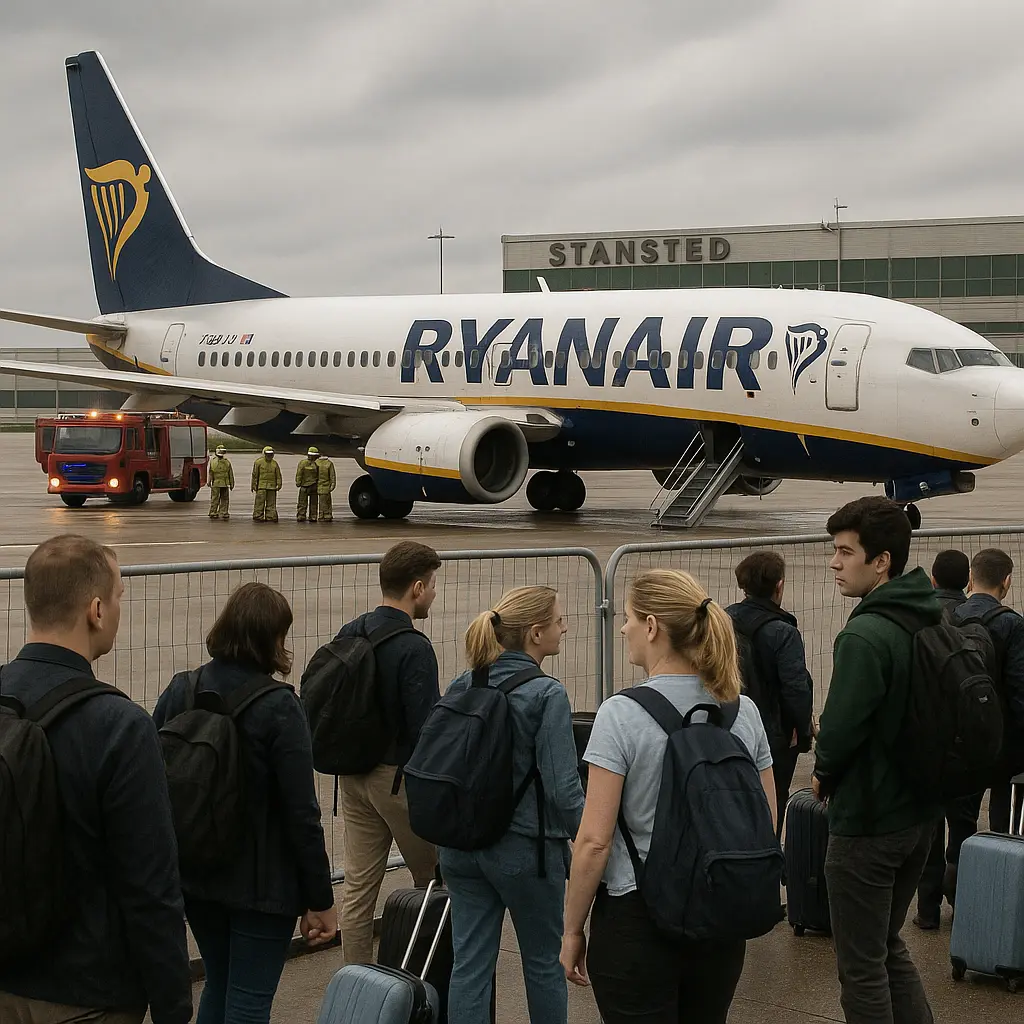
LOS ANGELES — Flights at Los Angeles International Airport (LAX) were temporarily grounded on Sunday following a ground stop caused by an equipment outage, according to the Federal Aviation Administration (FAA).
Airport officials confirmed that the issue was swiftly contained, and flight operations resumed after technical teams restored normal functionality.
⚙️ Los Angeles Airport Outage
The FAA confirmed a brief suspension of flight operations at LAX due to an equipment malfunction that disrupted air traffic coordination systems.
The outage caused short-term delays for both arrivals and departures before being resolved.
LAX, managed by Los Angeles World Airports (LAWA), is the fourth busiest airport globally and the second busiest in the United States by passenger volume — handling roughly 1,500 daily flights operated by major carriers such as Delta Air Lines (DL), American Airlines (AA), and United Airlines (UA).
The FAA emphasized that the issue was not related to cybersecurity concerns and that standard contingency procedures were in place to maintain flight safety throughout the disruption.
“Operations were briefly impacted but resumed quickly after our technical teams restored full system functionality,” airport officials said in a statement.
Cybersecurity Concerns in Aviation Infrastructure
The timing of the LAX outage raised eyebrows as several major European airports recently experienced digital disruptions linked to cyber incidents.
Late last month, London Heathrow (LHR), Berlin Brandenburg (BER), and Brussels (BRU) airports suffered system outages tied to a cyberattack on Collins Aerospace, a unit of RTX.
That attack temporarily disabled check-in and boarding systems powered by the company’s MUSE platform, leading to flight cancellations and long delays.
Although most systems were restored within hours, European regulators have since launched investigations into the source and scope of the attack.
RTX confirmed the incident as a “cyber-related disruption”, highlighting how aviation systems remain vulnerable to digital threats that can have serious operational and financial consequences for airlines and airports alike.
LAX: Scale, History, and Economic Significance
Founded in 1928 as Mines Field, Los Angeles International Airport (LAX) has grown into a global aviation hub serving over 75 million passengers annually.
Operated by Los Angeles World Airports (LAWA), LAX supports more than 620,000 regional jobs and contributes over $126 billion in economic output to Southern California.
The airport features four main east–west runways, supporting large-scale passenger and cargo operations. It ranks tenth globally in air cargo tonnage, processing over 2.4 million tons of freight and mail annually, valued at nearly $87 billion.
To meet growing demand, LAX is undergoing a multi-billion-dollar modernization program, including construction of:
- The Automated People Mover (APM) system
- A Consolidated Rental Car Center (CONRAC)
- Upgraded terminal infrastructure
These projects aim to enhance efficiency, reduce congestion, and modernize passenger movement across terminals.
Broader Implications for Global Aviation
The temporary ground stop at LAX, while brief, underscores how infrastructure vulnerabilities — both mechanical and digital — can ripple across global aviation networks.
As major hubs continue to digitize operations, the event reinforces the importance of:
- Redundant systems and fail-safes
- Proactive maintenance protocols
- Enhanced cybersecurity coordination between airports, airlines, and regulators
In an era where air traffic depends heavily on digital systems, operational resilience and cyber readiness remain essential to ensuring the stability and safety of global air travel.